

A historic hotel bar reimagined with character, atmosphere, and a touch of mischief.
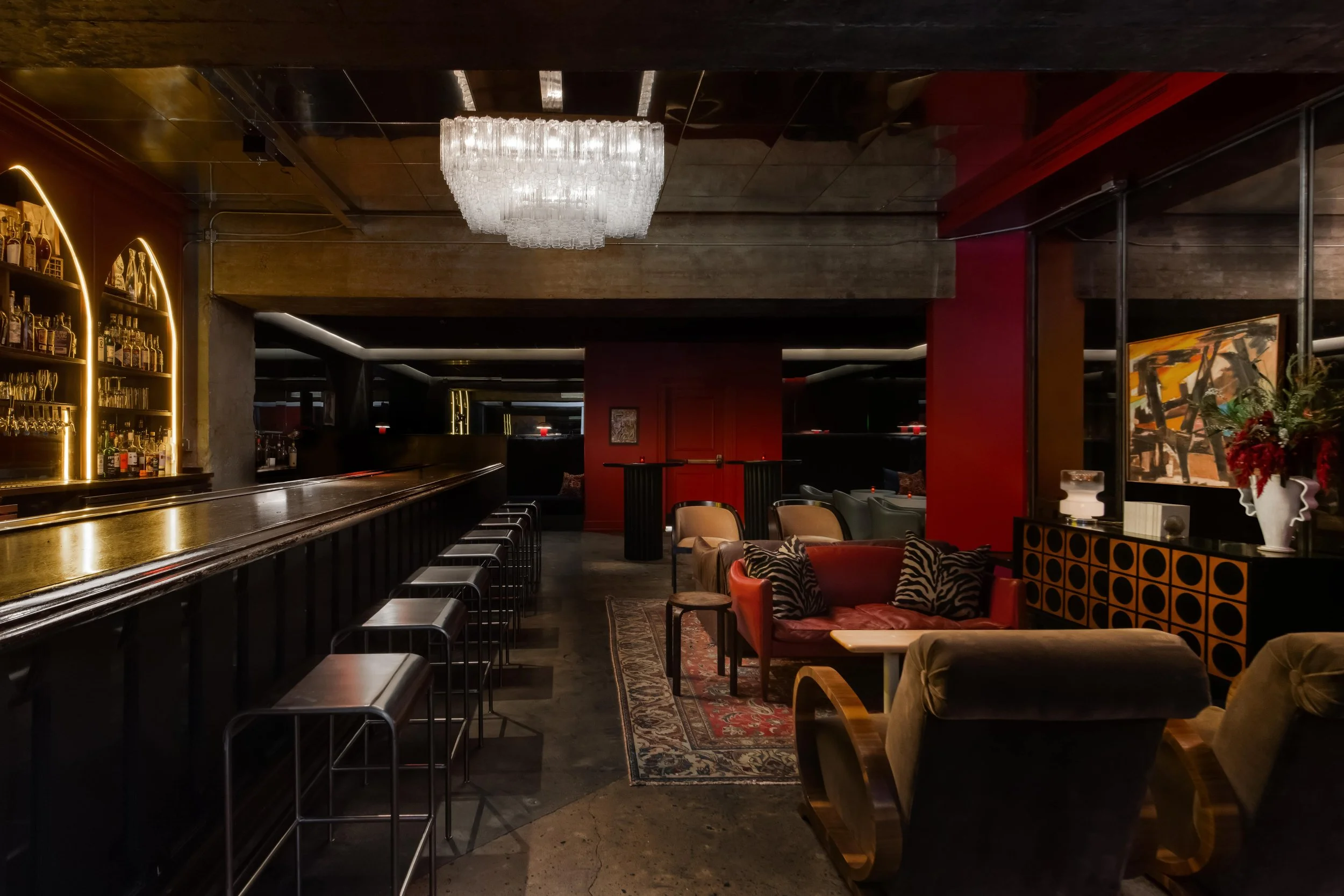
When we were approached to reimagine the hidden bar inside Noelle — a 1930 Art Deco grande dame hotel in downtown Nashville — the brief was clear: create a Nashville speakeasy-style bar design with character, history, and a little mischief. (Think Moulin Rouge meets your coolest aunt.)
Noelle itself is a landmark. Built in 1930 by brothers John and Oscar Noel, the 12-story Noel Hotel was the tallest building in the city at the time. For decades, the original hotel hosted dignitaries and celebrities (including Eleanor Roosevelt and Babe Ruth) before closing in the 1970s.
In 2017, the Noel was reopened after decades of quiet with a new name — Noelle — and a new identity. Hospitality investment group Rockbridge tapped Nashville’s Dryden Architecture and Design, together with Feltus Hawkins, to reimagine the property as a 224-room boutique hotel that blends Art Deco heritage with modern style.
Nashville Bar Design: Creating Zones for Different Experiences
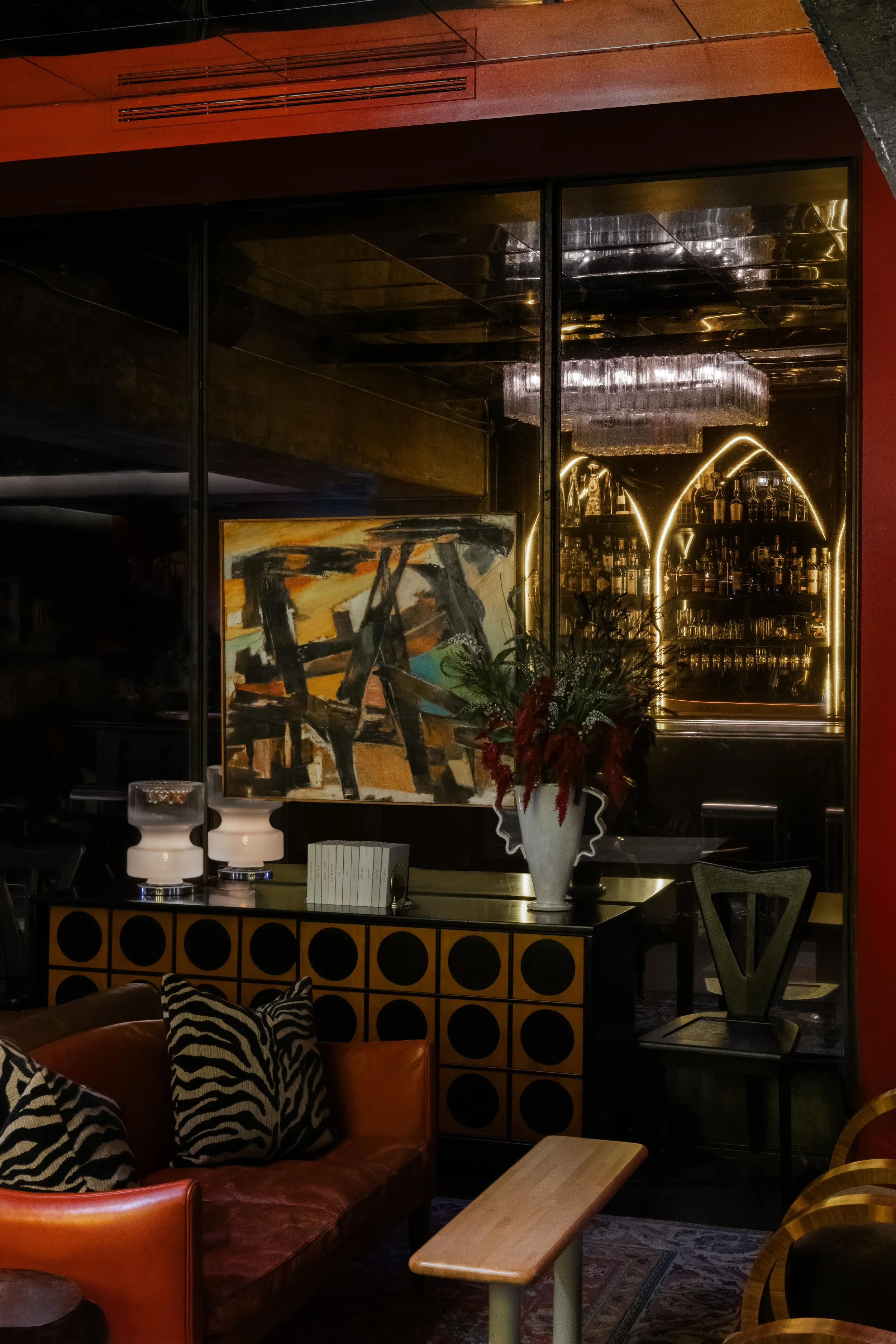
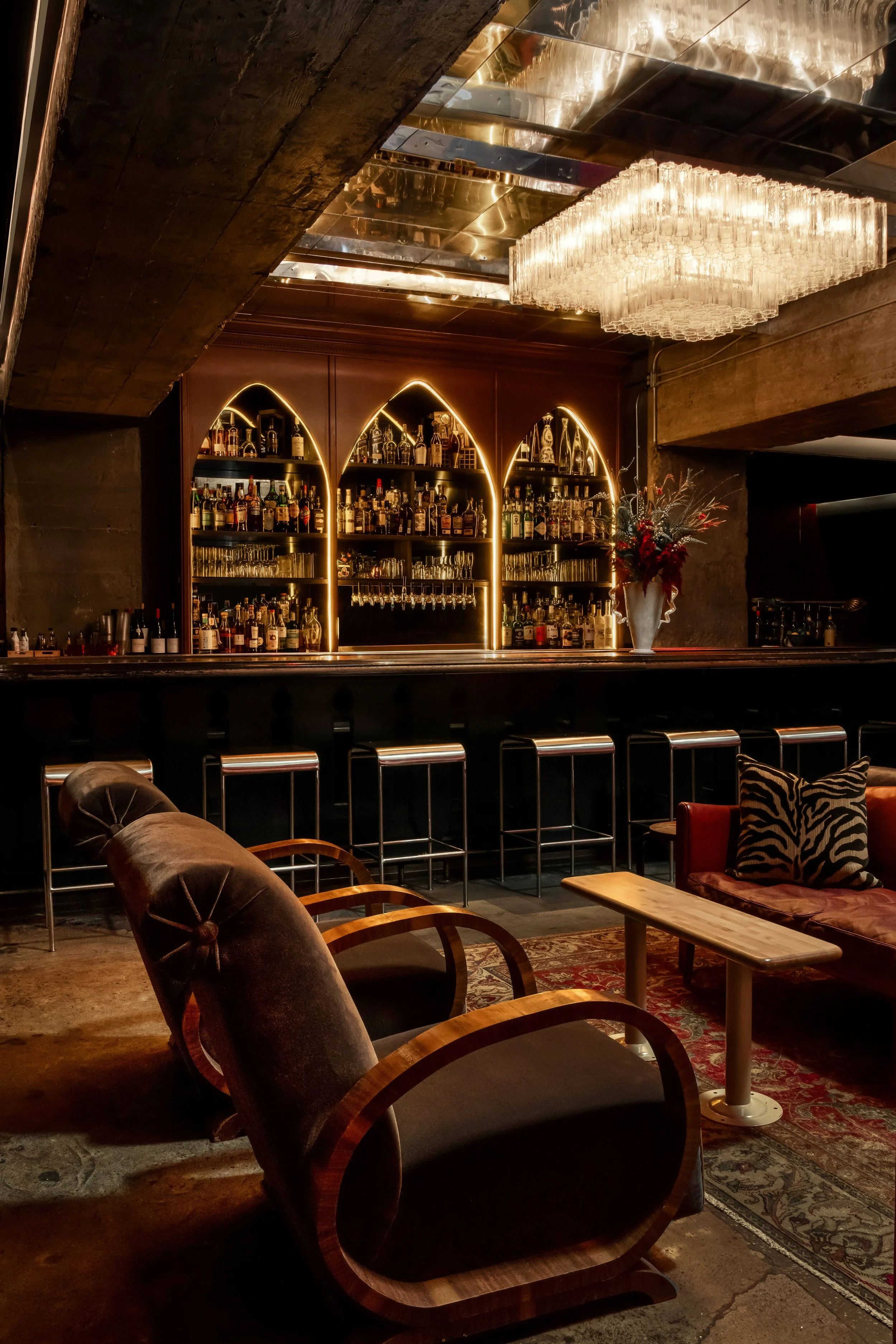
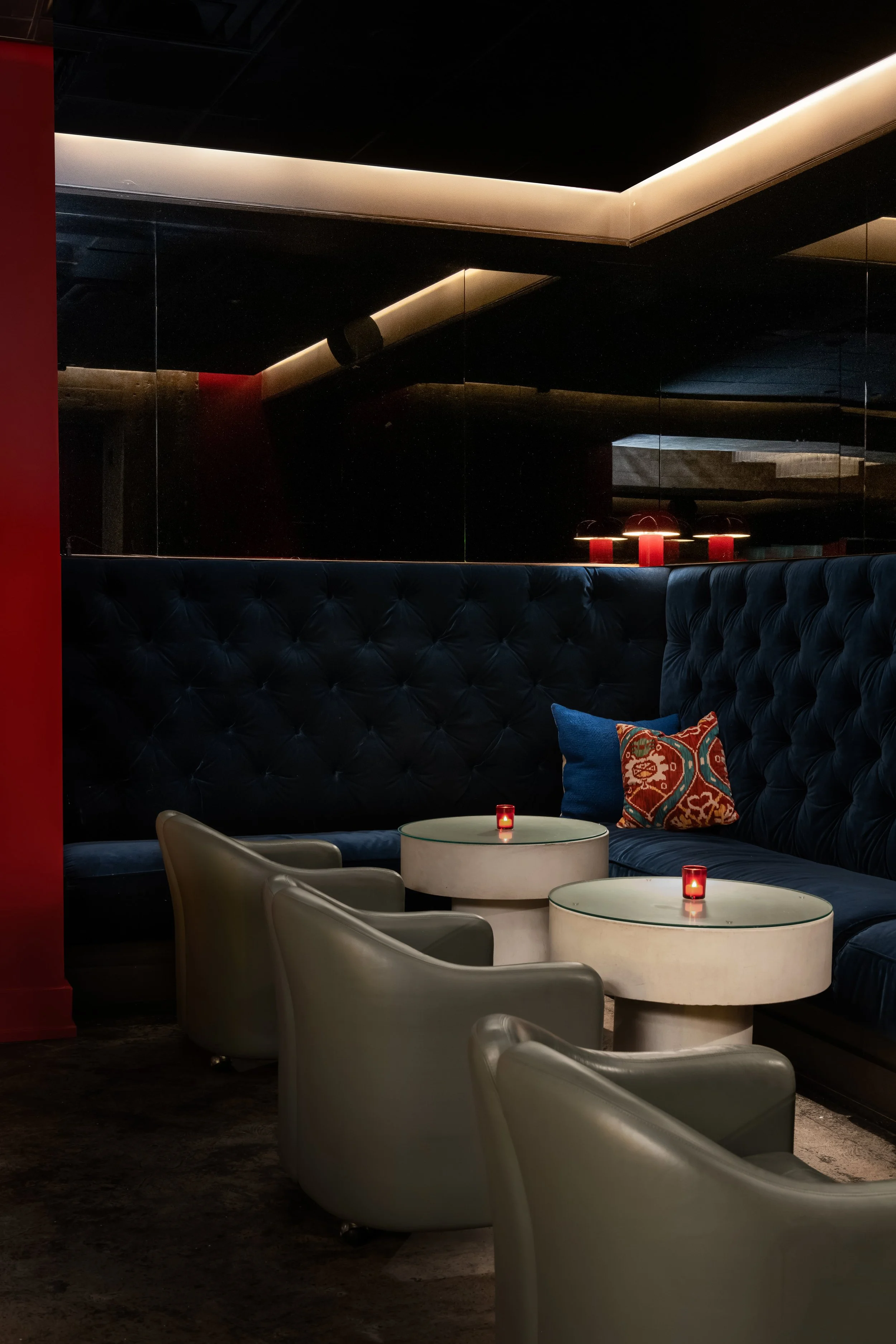
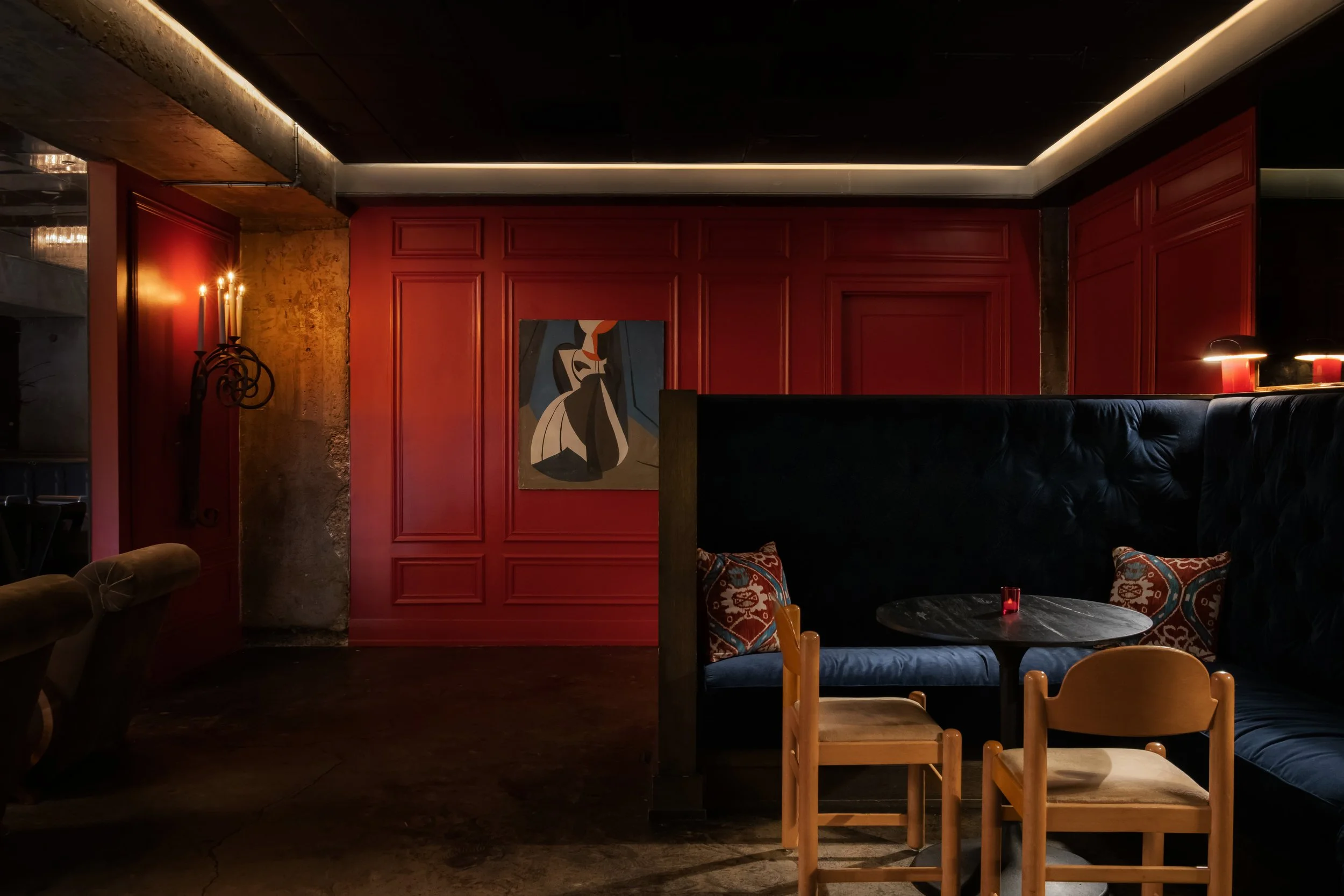
Hotel bar design influences the rhythm and flow of the night. In the Hidden Bar, seating was central to that experience. We designed multiple zones: bar-height tables for light bites, cocktail groupings for conversation, lounge-style arrangements for groups, and low-slung Art Deco chairs for sinking into and staying awhile.
The goal was to give guests options. A couple could retreat to the shadows, a group could gather in the center, or a solo visitor could perch at the bar.
Vintage Character, Timeless Style
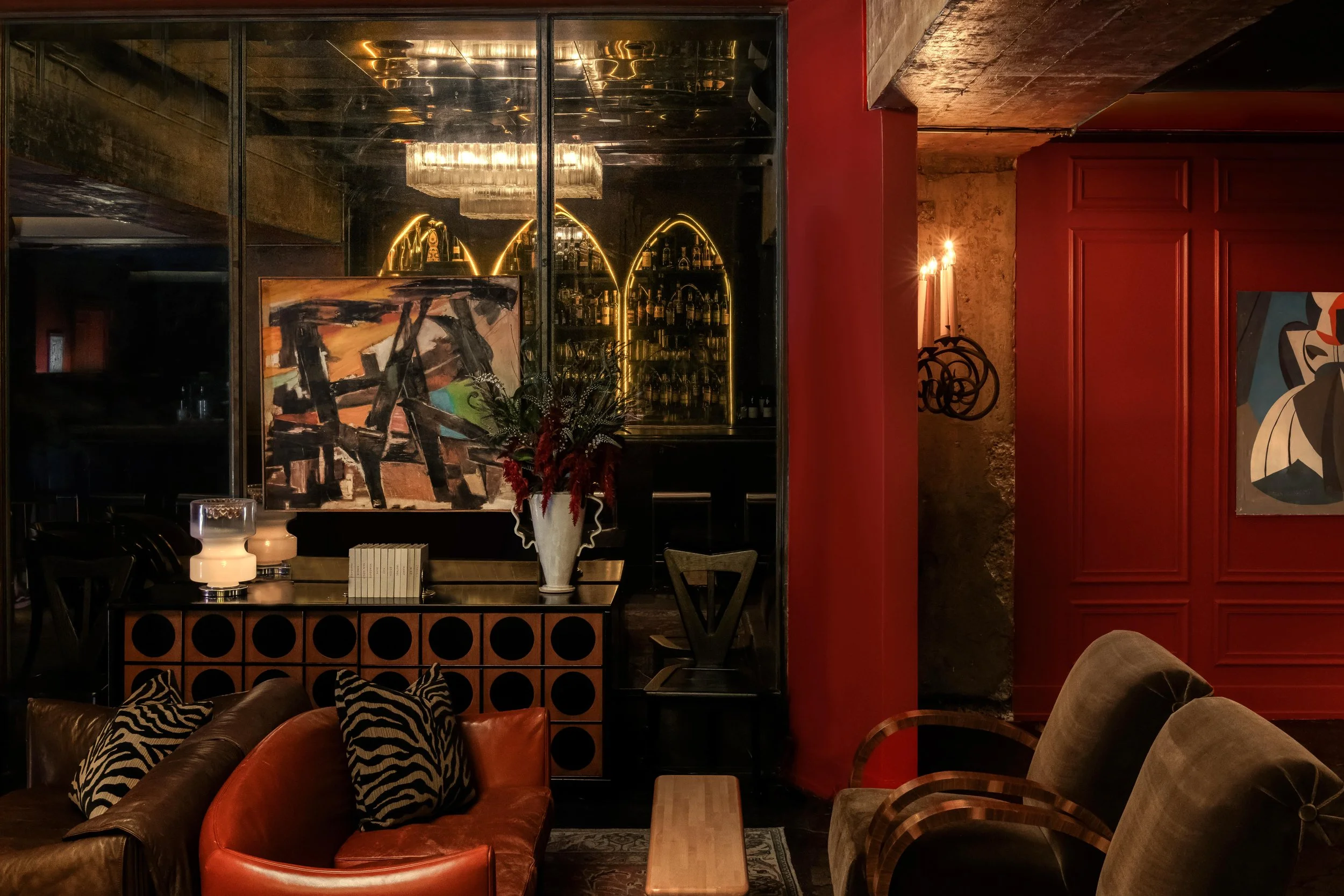
The project's targeted budget called for thoughtful sourcing. To achieve a balance of style and substance, we focused on what Sarah calls "good vintage." These are well-made, near-iconic pieces with character, sourced through our trusted dealers.
Vintage lends a sense of permanence. Amid Nashville’s ever-shifting nightlife and constant stream of new restaurant and bar concepts, our goal was to design a space that felt rooted.
Amber Light and Gothic Arches
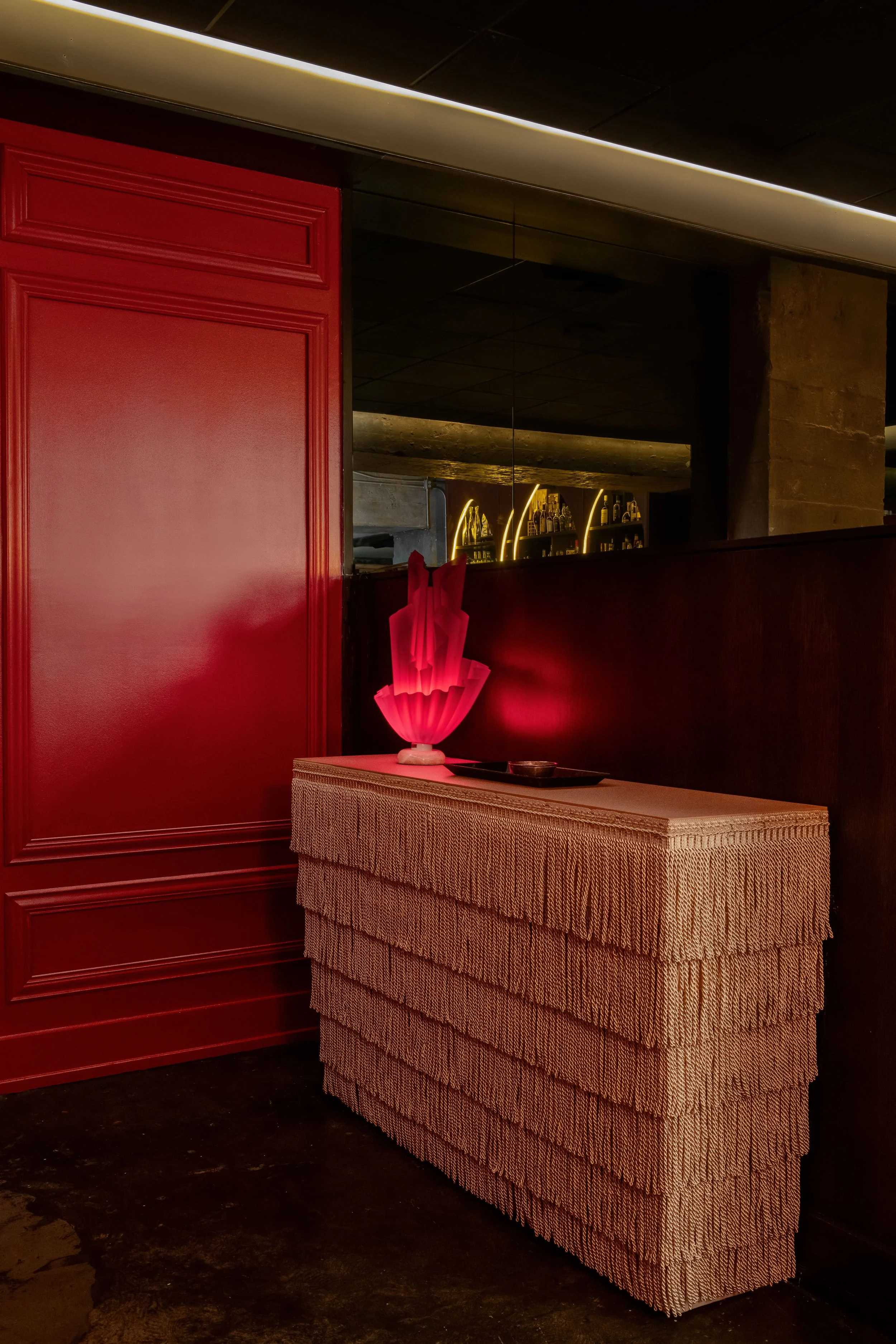
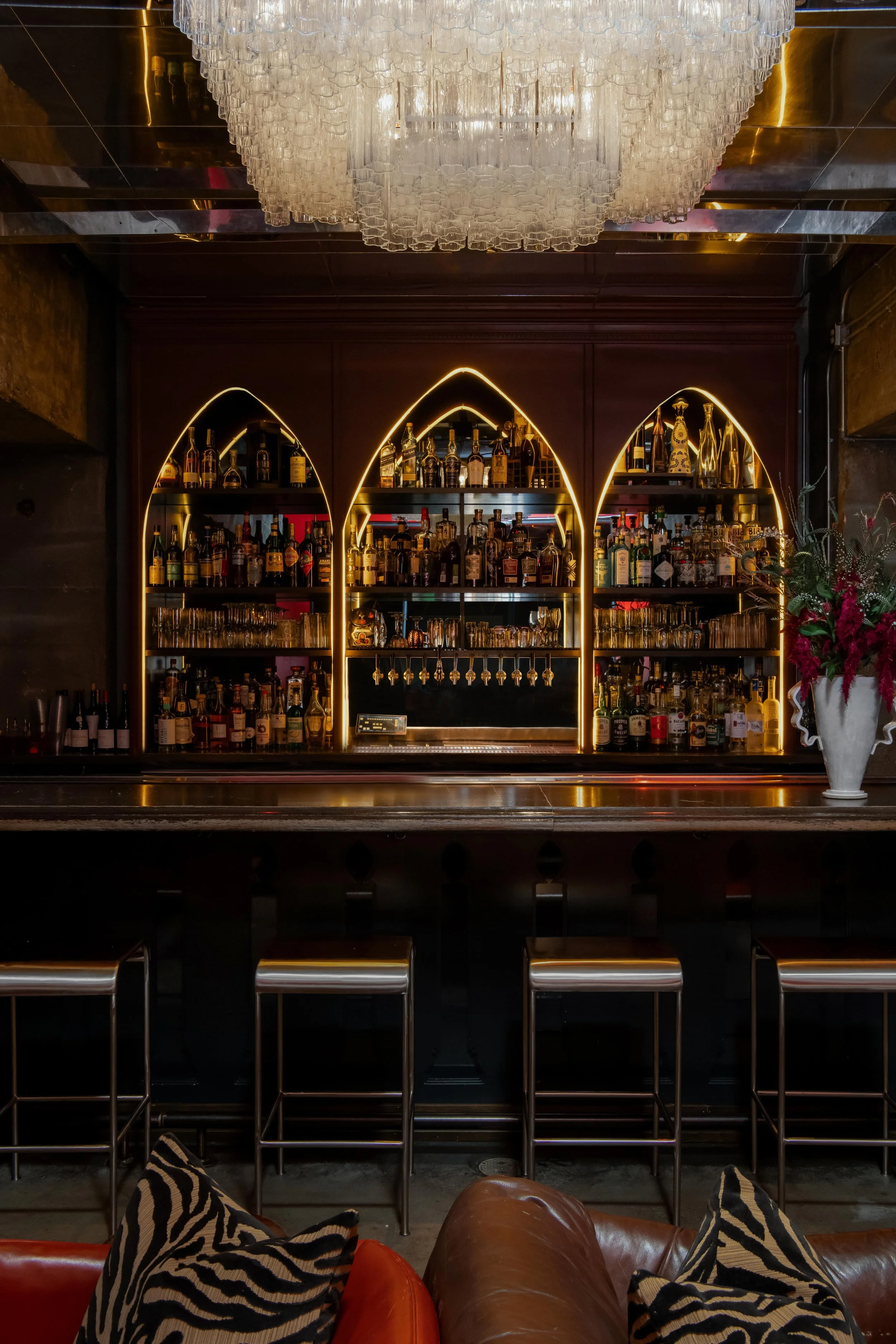
The liquor backbar posed the biggest design challenge. Rather than rebuilding it from scratch, we chose to reskin the existing structure, transforming it with a new focal wall. After an early contractor mis-cut the arches, we turned to a new fabricator who delivered what we envisioned: three Gothic arches traced in amber light. Those Gothic arches became a defining feature of the speakeasy interior, showing how commercial interior design in Nashville can honor history while creating atmosphere.

Lighting as Atmosphere in Hotel Bar Design
Every bar needs a focal point. For Noelle's Hidden Bar, the feature is the chandelier. Salvaged from a hotel, the massive crystal fixture now hangs above a stainless-steel ceiling. When illuminated, it throws glittering reflections across the space.
Lighting was central to the design. The chandelier highlights the combination of styles in the room, serving as an example of how hotel bar design can merge industrial, classical, and modern influences.
Finding the Hidden Bar
When the Hidden Bar opened, the speakeasy saw lines out the door and hours-long waits. The final design continues to capture the spirit we set out to create: layered and atmospheric with a touch of playfulness.
Travel Tip: Visiting Nashville? Noelle is in the heart of downtown Nashville at 200 4th Avenue North, just steps from Broadway and Printer's Alley. It’s one of the best examples of Nashville restaurant interior design and nightlife tucked inside a historic hotel.
You'll find Hidden Bar tucked down an unmarked hallway inside Noelle, behind what looks like a storage door. After ordering your cocktail, we suggest snagging a seat beneath the chandelier, so you get the sparkle above and the full sweep of the bar in view.
Lessons for Hospitality Design
Every project teaches us something new. The Hidden Bar underscored a few ideas that are worth keeping in mind for anyone designing a hospitality space:
Choose the right team. Look for an aesthetic that resonates with your brand, and have conversations about how the designer collaborates. Do they listen closely to your goals? Do they adapt their vision to your operational needs? That alignment is what allows a project to feel authentic and long-lasting.
Spend strategically. Not every element needs to be rebuilt from scratch. Sometimes, a reskin or a thoughtful reworking of what’s already there can deliver more impact than a complete overhaul.
Design in zones. People don’t experience a bar or restaurant in one way. Some want lively conversation in the center of the room; others want the intimacy of a tucked-away corner. Building in those options allows guests to choose their own night, which ultimately keeps them coming back.
Consider history and context. Every building tells a story, and weaving that into the design adds depth. At Noelle, working within an Art Deco structure shaped our choices and created a stronger connection between past and present. Guests notice when a space feels rooted in something larger than itself.
Use lighting with intention. Few elements set mood as powerfully as light. In the Hidden Bar, the chandelier against the steel ceiling defined the atmosphere — a reminder that in hospitality and commercial interior design, lighting is one of the best tools for shaping experience.
