

The Fireplace Inspired by Medieval Demons — and Why Your Home Needs Something Just as Unexpected
A demon-inspired fireplace. A six-week timeline. Here's what happens when a designer leads with a bold idea.
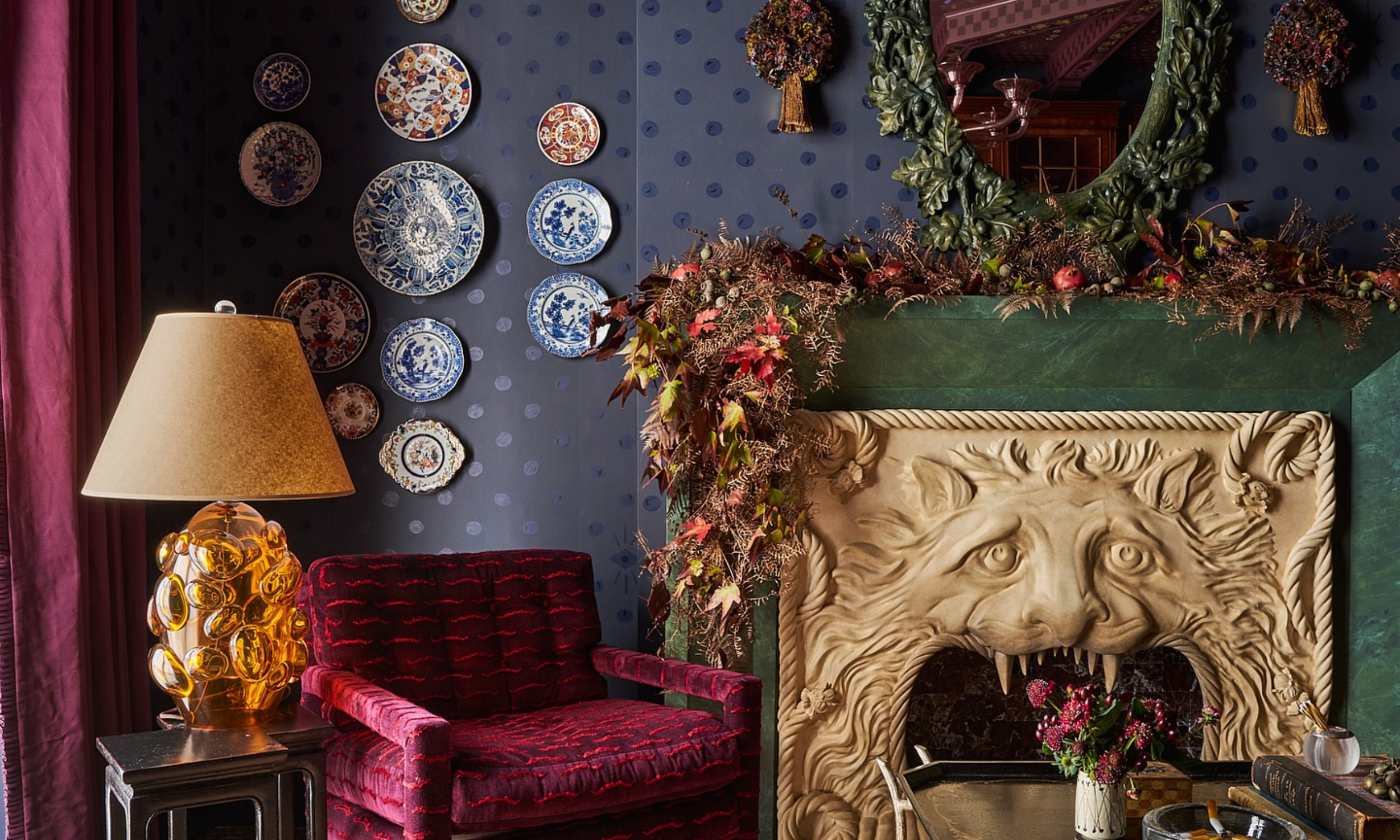
Austin interior designer Sarah Stacey was given six weeks to design a room for Kips Bay Dallas, the legendary annual designer showhouse. The instructions were simple: Take a room, make it yours.
Sarah started with the fireplace.
She drew inspiration from medieval Hellmouth imagery. The Hellmouth is a recurring motif in 10th-century Anglo-Saxon art, where the entrance to hell is depicted as the gaping mouth of a monstrous creature.
"I had to have the Hellmouth fireplace," Sarah says. Sarah and the SSID team searched for an existing version and explored sponsorship options, but both paths stalled. The cost was too high and the timeline didn't work.
Sarah made a call: she would 3D print it. An idea took shape. A large lion in high relief, with an open mouth forming the opening, fangs visible, and a flowing mane.
The Making of the Fireplace
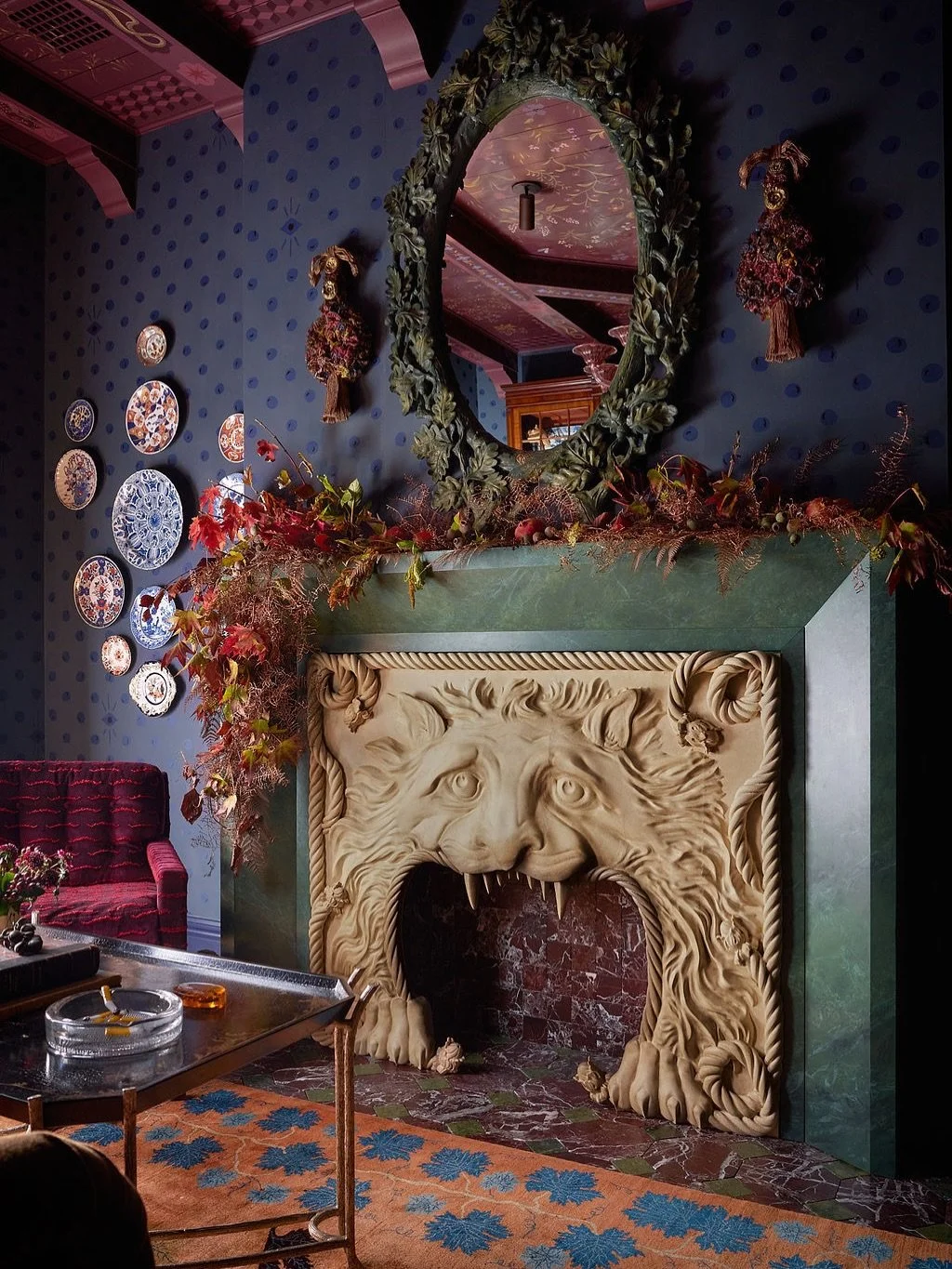
The fireplace was conceived and sketched in the SSID studio. From there, the design moved through several rounds of refinement. Anne Barlow developed additional sketches. Sarah Capps refined the concept further. A 3D artist translated the design into a rendering, which became a digital model, and finally a full-scale print.
Because the fireplace was for a showhouse rather than a functioning installation, the team did not need to meet structural or fire safety requirements. That freedom opened up more material options. As an added benefit, the print can now serve as a mold if the studio ever wants to recreate the piece in plaster or another finish.
The final layer came from Paige Martin Artifacts Plus Studio, who applied a stone texture and added just enough soot to give the piece realistic age.
Why the Fireplace Came First
The dramatic fireplace anchored the room. Everything else — including the palette, materials, and furnishings — was chosen in relation to it.
"That sequencing is intentional," Sarah explains. "When a room has a strong element at its center, the rest of the design has direction."
Visitors described the space as "calm," which might seem unexpected for a maximalist design.
"That calm comes from having a clear point of view," Sarah says. "Nothing was competing for attention. Everything was considered in relation to something else."
What This Can Look Like in Your Home
The Hellmouth was Sarah's idea, but that is not always how the process starts. Sometimes a client comes in with something specific, such as a piece of art they love or a chair they have held onto for years. That becomes the center of the room, and the design builds around it.
Other times, the idea comes from the studio. When a client trusts that direction, the custom element often becomes the part of the home they end up loving most.
Either way, the process stays the same. The team develops a clear concept and brings the direction to you. Once approved, everything else in the room is built to support it.
Why Your Home Needs a Custom Anchor Piece
Your home doesn't necessarily need a demon-inspired fireplace. However, at SSID, we're firm believers that a cohesive living space should have a focal point. Here's why your home needs a custom anchor piece:
A defining element creates visual hierarchy. Without a focal point, a room can become a hodgepodge of stuff rather than a designed space. A defining element tells the eye where to go.
A defining element gives the design direction. Once the focal point is established, every decision — from palette to furnishings — can be made in relation to it. With this direction, the room stops feeling like a series of individual choices and starts to feel like a whole.
A custom anchor piece makes a space feel unique to you. A custom element makes the space yours.
It makes the room memorable. Rooms without a defining element can blur together. A custom focal point is what people remember.
What the Custom Anchor Piece Design Process Looks Like

Designing a custom anchor piece is a process. Here's what you can expect when you work with SSID:
Step 1: Visioning
Our interior design process begins with a visioning phase. This initial step is all about getting to know you, from your favorite artists, musicians, and movies to your lifestyle and goals.
During this phase, we'll discuss what iconography, references, and styles should inspire the custom piece. From there, the team assembles a vision board pulling together colors, textures, and images that capture your style.
Step 2: Sketch
Next, the concept is worked out by hand. Sketching lets the design develop before any technical decisions are made.
Step 3: 3D Modeling
The sketch is made into a 3D model to figure out proportion and placement. This step is where adjustments can be made.
Step 4: Production
Lastly, the approved model moves into production. Depending on the piece, this step may involve anything from 3D printing to stone carving to millwork. We work with a network of local artists and craftspeople across Texas, Tennessee, and beyond, drawing on relationships built over years to connect your project with the right hands.
Ready to Design Something Unexpected?
If you want to bring a custom anchor piece into your home, Sarah Stacey Interior Design wants to hear from you. Whether you have a clear vision or a sense that your space is missing something, the process starts with a conversation. Schedule your initial consultation.
FAQs
What is a custom anchor piece in interior design? A custom anchor piece is a one-of-a-kind element — such as a fireplace surround, a piece of custom millwork, or a sculptural light fixture — designed specifically for your space and built around your vision. Unlike sourced furniture, this personalized element cannot be replicated in someone else's home.
How long does it take to design and fabricate a custom piece? The timeline depends on the complexity and fabrication method. At SSID, we build plenty of time into every project so the design can unfold without rushing. Generally, you should expect the custom piece process to take several weeks from concept to installation.
How much does a custom interior design element cost? The cost depends on the size, materials, and fabrication. During the initial consultation, we discuss your goals and budget to determine what's possible.
What makes Sarah Stacey Interior Design different from other interior designers? SSID approaches every project with the goal of creating spaces tailored to the people who live in them. That means going beyond sourced furniture to consider custom elements that give a room its identity. Our network of artists and craftspeople across Texas, Tennessee, and beyond allows us to bring those ideas to life with the right hands.
Do I need to have a clear vision before reaching out? No. Many clients come to us knowing only that something about their space isn't working. The visioning process is designed to draw out your ideas, even if you don't have the words to articulate them. Start the conversation now by booking a Discovery Call.
