

Maximalism Over Quiet Luxury: Why Designer Sarah Stacey Prefers Character-Driven Interiors
Instead of neutral sameness, Sarah Stacey designs layered, expressive interiors that feel personal, collected, and unmistakably lived-in.
Linen sofas. Sandwashed floors. Whisper-thin stone veining. Wall-colored drapery.
These are hallmarks of quiet luxury, a minimalist, material-driven design aesthetic that has dominated interiors in recent years.
Sarah Stacey isn't having it.
"We are not quiet luxury," Sarah says. "Those spaces feel like carbon copies of each other. They're not unique."
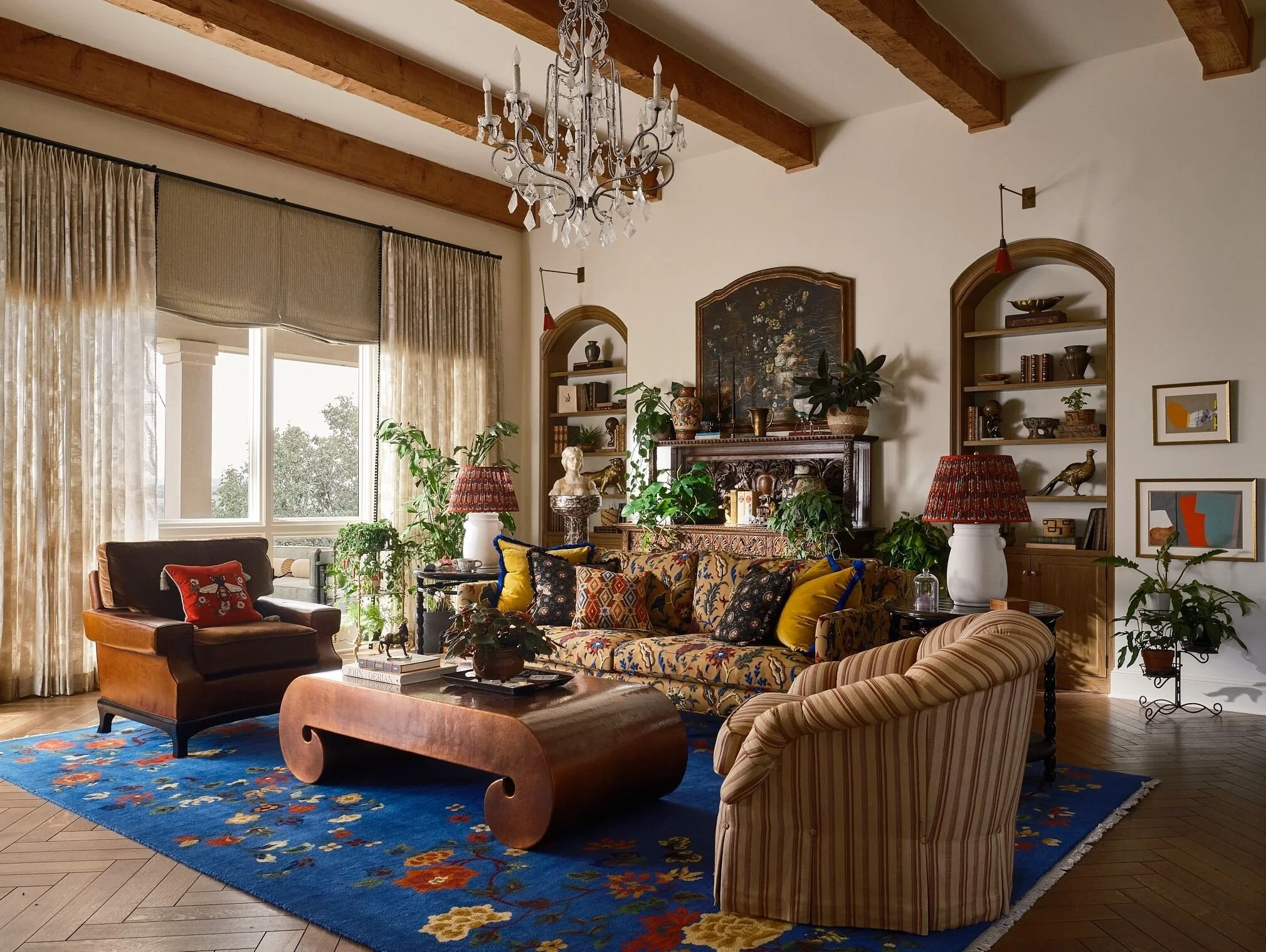
Sarah’s work champions another kind of luxury. Across residential projects in Texas and hospitality spaces from Austin to Nashville, her interiors embrace maximalist spaces that are uninhibited and personal.
Quiet Luxury vs. Maximalist Design Approaches
Quiet luxury rose to fame in the early 2020s, driven by post-pandemic minimalism and cultural fascination with "stealth wealth" aesthetics. Years earlier, figures like Marie Kondo helped normalize the idea that less is calmer and more virtuous. That mindset later merged with the aesthetics of “stealth wealth,” popularized by brands such as Loro Piana and reinforced by shows like Succession. Quiet luxury interiors leverage neutral palettes and minimal variation to create a broadly appealing, uniform environment.
Sarah notes that the look is difficult to achieve without significant investment in materials and craftsmanship.
"For it to really work, quiet luxury usually has to be extremely high-end with bespoke materials and furniture," Sarah says. "Otherwise, it can feel like Wayfair real quick."
Maximalist design, by contrast, is inclusive and personal, Sarah says. Instead of relying on uniform, high-cost finishes, maximalism makes room for layered elements like pattern, texture, color, antiques, art, and meaningful objects. With editing, the style can reflect the individuality of the people who live in it.
Maximalism in Practice: 3 Case Studies
Where quiet luxury prioritizes sameness, Sarah’s projects demonstrate how maximalism can feel calm, even with layers and personality in the mix. Sarah's "zen" maximalist designs were highlighted by Austin Women, who described her approach as "balancing calm and chaos." The case studies below show maximalism in action:
Kips Bay Decorator Show House: Maximalism Under Pressure
At the Kips Bay Decorator Show House in Dallas, Sarah and her team had just six weeks to transform a blank room into a fully realized space. The ceiling, a hand-painted, Bavarian-inspired mural, set the tone for the rest of the room. Custom wallpaper, antique furniture, artist-made objects, and a sculptural fireplace surround were layered intentionally.
"Several people told me it was one of the most calming rooms of the house, even though it was one of the smallest, " Sarah says. "That’s a huge compliment for a maximalist space."
The Menagerie: Hospitality Maximalism at Scale
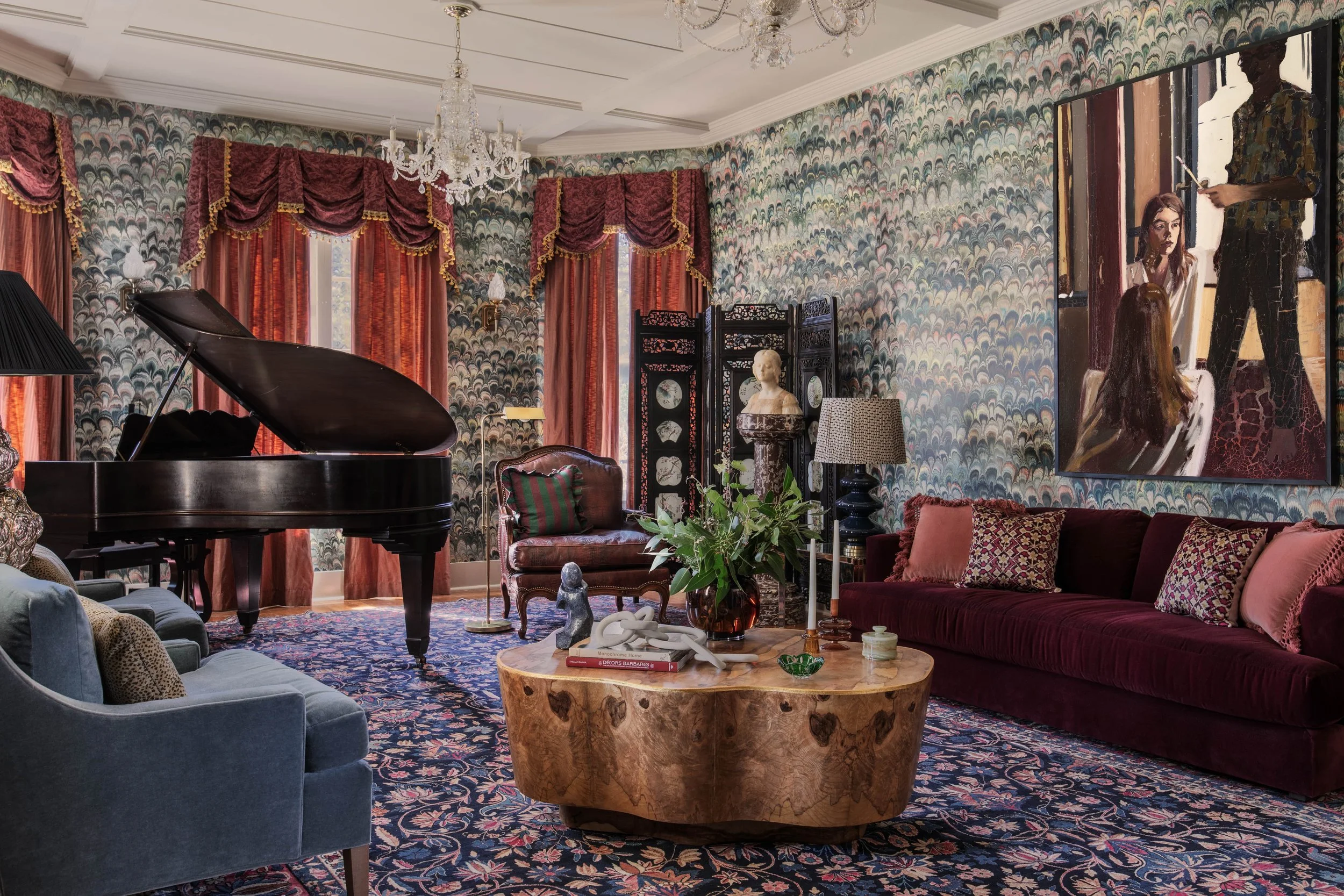
Set across a restored Queen Anne mansion and a collection of 1930s bungalows in Fredericksburg, The Menagerie shows how maximalism can unify distinct spaces without relying on repetition. Sarah and her team layered saturated color, pattern, vintage furniture, bold lighting, and art, using minimal contrasting colors to create a cohesive narrative.
Hidden Bar at Noelle: Maximalism as Intimacy
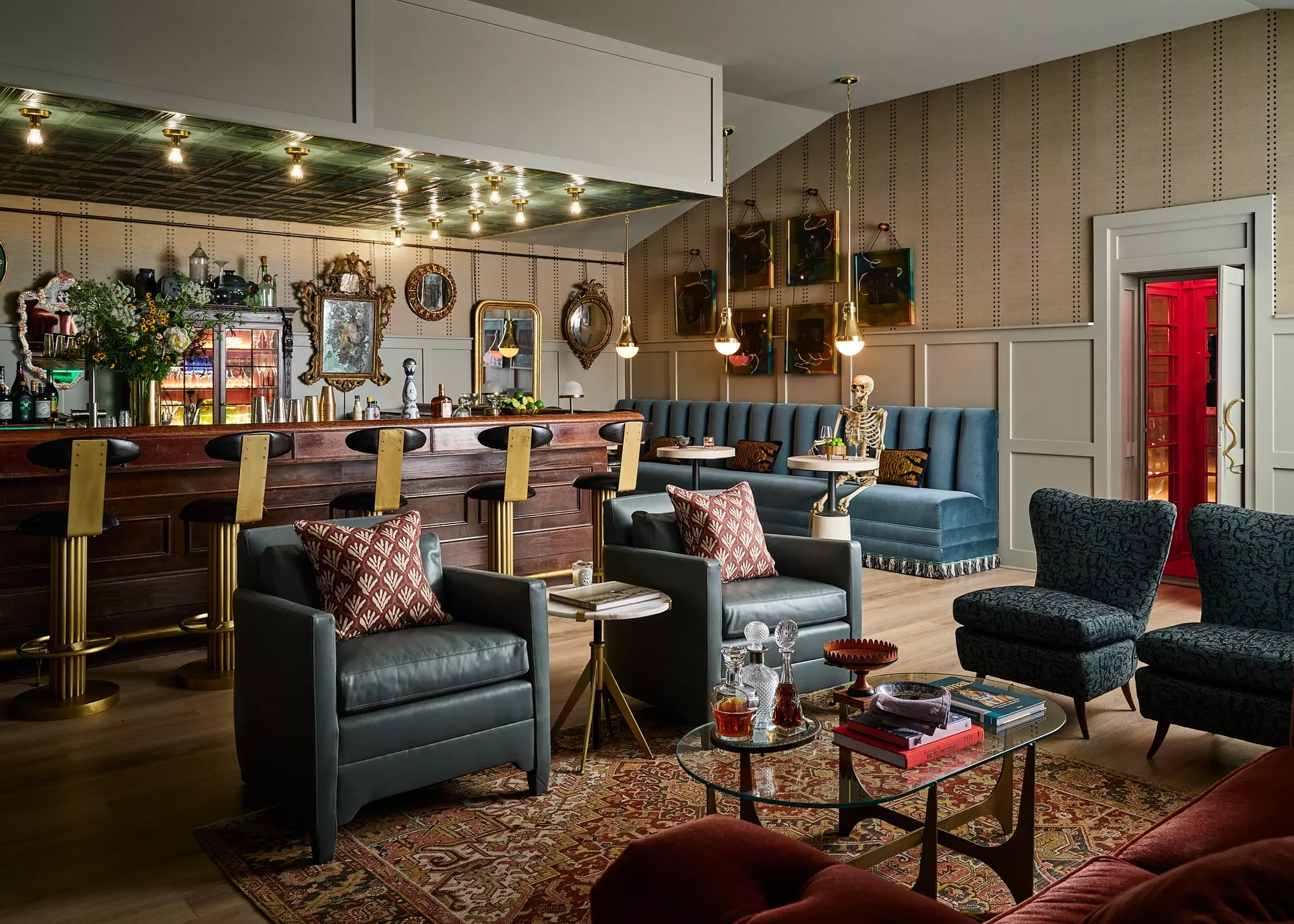
For the Hidden Bar at Noelle in Nashville, Sarah and her team applied maximalism to create atmosphere. Jewel-tone upholstery, Gothic arches, and curated vintage furniture build mood through contrast.
"The mix of industrial and classical elements is really fun," Sarah says. "The way the chandelier sparkles on the stainless-steel ceiling feels a little bit like magic."
Work With Sarah Stacey Interior Design
Sarah Stacey Interior Design creates residential and hospitality interiors that reject sameness and celebrate personality. From Texas Hill Country estates to boutique hotels, we design spaces that feel unmistakably yours.
If you’re drawn to interiors that prioritize character over conformity, we’d love to collaborate. Reach out to Sarah Stacey Interior Design to discuss your project.
Frequently Asked Questions About Maximalism Over Quiet Luxury
What does 'maximalism over quiet luxury' mean in interior design?
"Maximalism over quiet luxury" is a design approach characterized by expressive, layered interiors rather than neutral, minimal spaces. Rather than prioritizing high-end materials and sameness, maximalism emphasizes color, texture, and individuality.
Why choose maximalism over quiet luxury?
Homeowners and hospitality clients often choose maximalism over quiet luxury when they want spaces to feel personal. Quiet luxury can be beautiful, but it relies heavily on ultra-high-end materials and precise execution. This can lead to interiors that feel predictable.
Maximalism, by contrast, offers flexibility and creative range. Because the aesthetic isn’t tied to a narrow set of finishes or materials, maximalism allows for greater variation.
Is maximalism over quiet luxury better for long-term design?
For many clients, yes. Maximalism tends to age well because the style reflects personal history and taste. Quiet luxury can feel timeless when executed at a high level, but when imitated poorly, the trend risks looking flat. Quiet luxury is having a moment, but maximalism has existed for centuries.
Does maximalism over quiet luxury work in hospitality spaces?
Absolutely. In Sarah’s boutique hotel and speakeasy projects, maximalism creates identity and atmosphere — qualities that quiet luxury lacks. Layered materials and contrast can make spaces memorable and immersive for guests.
