

Trends Aren’t the Problem. Trend Shame Is.
How to read interior design trends without panic, pressure, or unnecessary replacement.
You’re scrolling Instagram, minding your own business. Then, you stumble across a post from your favorite magazine declaring brass is "dead."
You look over at the unlacquered brass pulls and knobs you just installed. Your first thought: "Seriously?"
You're not regretting your choice. You simply feel exhausted by the constant pressure to keep up. It's annoying to be told your home is already outdated.
This is trend shame in action. And it's everywhere.
Some of the complaints about trend culture are fair. The constant declarations that your favorite pieces are "out" create pressure to replace things that still work. The cycle fuels overconsumption, waste, and a nagging sense that your home is never quite right.
Here’s the part that gets missed: "out" doesn’t mean wrong. It means attention has shifted. Understanding this distinction starts with looking at what a trend represents.
Here's how I look at trends, and how to read them without feeling like you need to redo your whole house.
Why Trend Talk Hits a Nerve
Taste is tied to identity. The colors, materials, clothes, music, art, and spaces we love are little flags that say, "this is me."
Having your design choices disrespected or dismissed can feel personal. Trend language that frames choices as "in" or "out" can poke at insecurity.
However, trends are not rules. The discomfort comes from framing rather than the trends themselves.
What a Trend Is
I see trends as information. In other words: neutral.
A trend is what people are gravitating toward and searching for that moment. It’s not a declaration that everything else is wrong. A trend is not a demand that you change your house. The label simply marks a shift once enough people begin moving in the same direction.
Search behavior offers a helpful comparison. When more people begin Googling a material, style, or term, curiosity builds. Once interest reaches a certain level, the pattern gets named. That name becomes a trend.
Everything Is a Trend (Even the Things We Call "Timeless")
This is where the timeless conversation gets tangled.
People often say they want a timeless home so they don’t have to redo it. And while that’s understandable, the idea that anything exists outside of trends just isn’t true.
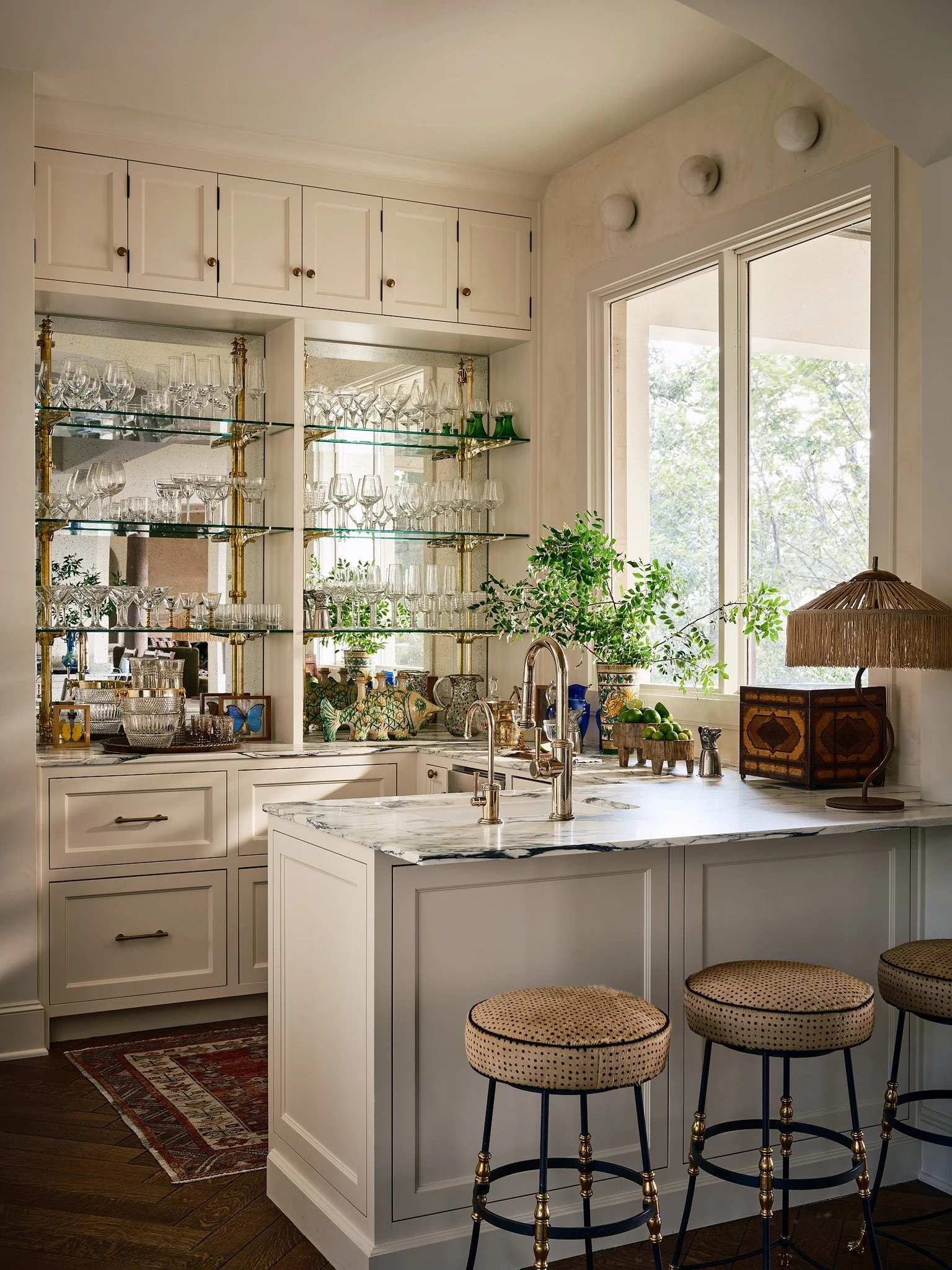
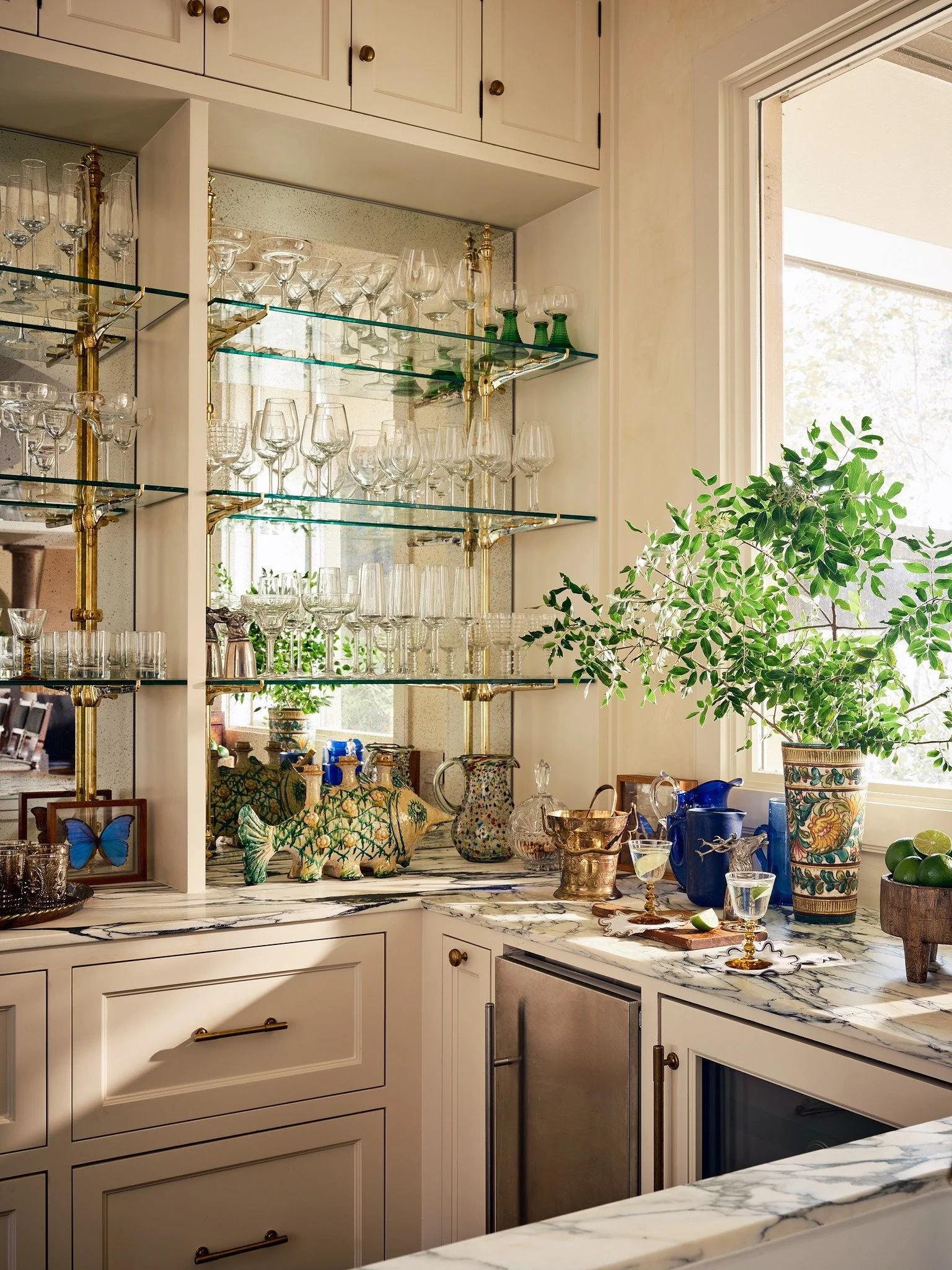
Take white kitchens. They’ve long been called timeless, and in many ways, they are. But you can still tell when a white kitchen was designed by the trim style, the material combinations, the undertones of the white, and the hardware choices.
Even designers who once claimed they "don’t use trends" were still designing within the trends of their era.
Everything will eventually look like a moment in time. That's how design works. Recognizing that everything is a trend takes the pressure off. If even 'timeless' choices are trends, there's no perfect decision you're failing to make.
Why Trends Shift
Trends change because people get tired of seeing the same answer everywhere.
Humans like familiarity until it becomes monotonous. Once something turns into the default shortcut for "updated," it gets overused. People start craving contrast.
That’s why I think of trends as a collective craving for contrast rather than a rejection. People aren’t saying, "This is bad." They’re saying, "I want to see something different."
This pattern has been studied for decades. In a classic study on variety-seeking behavior, researchers explained why people switch even among familiar, well-liked options. Once something shows up everywhere for long enough, the brain starts looking for novelty.
A Real-Life Example: Cool Metals Coming Back
There’s been a lot of conversation about cool metals like chrome, silver, and aluminum returning.
Some people assume brass is “out.” It isn’t. A well-worn, thoughtfully chosen brass finish will always be beautiful.
What changed was ubiquity. Brass became the default answer for "updated." As demand exploded, quality varied widely. Over time, overly polished, mass-produced brass finishes started to feel flat and overused. Now people are becoming more open to cool metals again because they’re craving contrast.
The shift signals interest in new options rather than rejection of existing ones.
How to Use Trends Without Letting Them Stress You Out
Here’s the framework I use when guiding clients through trends:
A trend should:
Help you name what you already like
Give language to something you’ve been craving
Open a door when you feel stuck seeing the same safe answers everywhere
Guide decisions about what to adopt, what to adapt, and what to avoid altogether
A trend should not:
Make you panic-buy
Convince you to rip out something you still love
Pressure you to redo your entire house
Make you feel bad about your choices
If something works for your life and you enjoy looking at it, keep it. If you’re replacing something anyway (say, because it’s worn out, broken, or no longer fits how you live) trends can be a helpful menu of options.
What This Looks Like in Action
When clients come to me about remodeling kitchens or bathrooms, the worry is almost always the same: "What if I don’t like this in 15 years?"
Most of my clients love color and bold choices that reflect their personality. The hesitation is about permanence. Kitchens and baths feel like commitments, so bold moves can feel risky.
Rather than avoiding character, I focus on where and how much to use certain ideas. Elements that are likely to become overdone work best in small doses.
Take scallops, for instance. I love a scalloped edge on a pillow trim or a set of sheets. The look is playful and charming in small doses. But I’d never commit to a scalloped edge on a permanent element like a marble backsplash or a custom tile shape.
A general rule of thumb? Be cautious with trends on permanent elements like tile, built-ins, and architectural details. Have fun with trends on flexible layers like paint, lighting, textiles, decor, and art.
The Point
Trends are not a test your house can fail.
Trends are not the problem. Trend shame is. If a piece of trend content makes you feel behind, ignore it.
Trend shame turns neutral information into pressure to replace, keep up, and second-guess. That pressure fuels unnecessary consumption and makes design feel anxious instead of supportive.
Pay attention to what you like, what you are tired of, and what feels like you. If a trend overlaps with that, great. If it does not, also great.
If trend noise has made you second-guess your home, working with a designer can bring clarity. I help clients sort through what’s worth changing, what’s worth keeping, and how to make choices that feel right now and years from now. Reach out to get the conversation started.
Interior Design Trends: Frequently Asked Questions
Are interior design trends worth following?
They can be — if you use them as information rather than instructions. Interior design trends reflect where attention and curiosity are shifting. When used thoughtfully, trends can help homeowners understand emerging preferences.
Does "out of style" mean something is wrong with my home?
No. When a style is labeled "out," it usually means interest has cooled or the look has become widely used. "Out" does not mean poorly designed, low quality, or a mistake. Many so-called "outdated" elements still function beautifully.
What makes a home feel timeless if everything is a trend?
Timelessness comes from thoughtful decisions. Homes feel lasting when permanent elements are chosen with restraint and meaning.
How do I know when to update my home versus keep what I have?
Updates make sense when something is worn out or no longer functional. If an element still works and feels good to live with, replacement is not necessary, regardless of trend cycles.
Why do design trends change so often?
Design trends shift due to overexposure and repetition. Research shows people crave novelty after seeing the same option repeatedly.
How can trends be used sustainably in interior design?
Using trends sustainably means avoiding panic purchases and unnecessary replacements. Trends can guide decisions when an update is already needed, helping homeowners choose options that feel current without contributing to excess consumption or waste.
